BBC 6 Music 'The First Time with...', june 19th 2016
[Interview with Jonny]
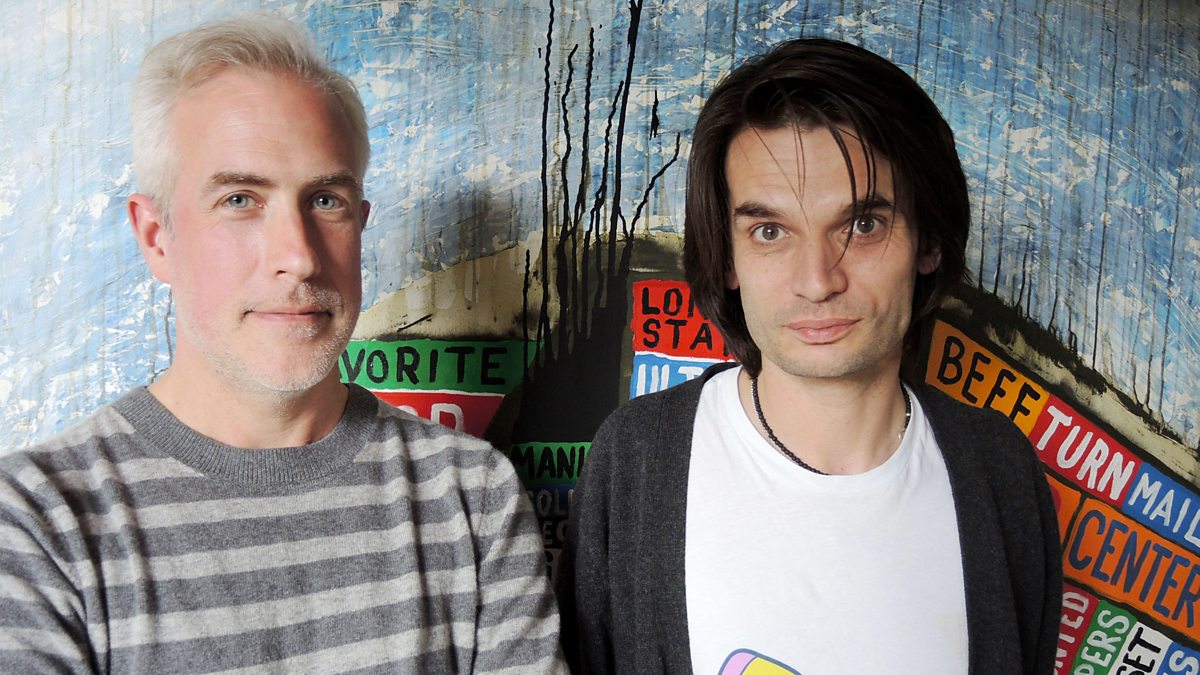
[This is a transcript from an audio recording of the broadcast. The interviewer is Matt Everitt. Transcript by Giselle. Click image for full size.]

[recording starts here]
Matt Everitt;
Here Jonny talks about the music that obsessed him growing up, from the fall and new order to the classical composers that still impact on his work today. He also looks back at the start of Radiohead's career, how they coped with the huge success that followed their 97' album, Ok Computer, and their creative process in the recording studio. He also discusses his acclaimed film soundtracks, working with director Paul Thomas Anderson, how Radiohead missed out on doing a James Bond theme, and the recording of that new album, A Moon Shaped Pool. But I started the interview by asking Jonny, as I do with all my guests, when was he first aware of music?
Jonny Greenwood:
My first memory is probably being given a plastic recorder when I was about four/five as a surprise, and thinking it was amazing and playing it all the time. And, I stuck with it, to be fair. I kept playing it until I was an adult, so yeah.
Everitt:
Are you a good recorder player?
Jonny:
I took it pretty seriously, yeah. I was in recorder groups when I was a teenager when I should have been taking bong hits in a stolen car or something...and instead I was, you know, playing Baroque recording music...I know it's a wasted youth, what can I do? I've misspent.
Everitt:
What about recording music then, the first time you were aware of? Was it a radio or something got played in the house?
Jonny:
Yeah, I suppose it was cassettes in the car and we had like, a very small collection of the same cassettes being played over and over again. For some reason my mum was always keen to get the fake versions of famous records. So instead of having Simon and Garfunkel, we had the Woolworths £1.99 cassettes. Do you remember there were like...someone would just cover the same songs as closely as possible, and sell them for half the price?
Everitt:
Which are the ones apart from almost Simon and Garfunkel?
Jonny:
Musicals, actually. There was the flower drum song, bizarre sort of... yeah, just obscure musicals, always on cassette.
Everitt:
And the fascination with music was always... it was immediate with you.
Jonny:
Yeah, I suppose so. I mean, we had... It was quite a limited collection of music. You'd listen to the same thing over and over again and listen to it closer and closer. So, I remember doing that with records when I was really little. Yeah, and then eventually, suddenly it became about buying records and...well I was very lucky because I had and have an older sister, 10 years older than me. And of course, Colin in Radiohead, he's two and a half years older than me. So that meant I got to listen to their records. And older siblings always have better taste. So looking back, I was very lucky.
Everitt:
What sort of thing did they use to pass down?
Jonny:
I remember for one whole year, every morning, Colin would play in the living room, very loud...12" of The Beat. Things like Psychedelic Rocker. And he used to play Everything's Gone Green by New Order. And we heard that every morning, like obsessively, over and over again...we're very lucky, like the stuff we heard, I think stands up.
Everitt:
What about when you buy a record? What was the first one that was yours that wasn't owned by anybody else?
Jonny:
I remember getting hold of a copy of Cool for Cats. I don't think I would have bought it new, it must have been a few years old, even then. It was pink...and my mother threw it away because it was obviously a bad influence to have. Which is strange, isn't it? And, you know I'm quite nostalgic for those days. Nowadays it feels like parents are keen for their children to form bands and, you know, go and play rock music. But this was like the last gasp of it being vaguely...not the thing to do. I mean, you see teenagers now whose grandparents were probably in punk bands. So it's all rebellion gone. You know, maybe that's a good thing.
Everitt:
What about the first gig you went to?
Jonny:
The first gig I saw was distressingly cool to admit to, I'm afraid, because it was The Fall in Oxford. And I just couldn't deal with it. I actually left after four songs and waited outside because I just found it overwhelming. And then went back in again. And just the volume and the chaos and the... It was exciting, but just overwhelming. And Brix Smith playing guitar and... It would have been Friends Experiment tour, I think. And just thinking how exciting it was, but overwhelming. I just remember standing outside and hearing it by the emergency doors and still listening to it and just trying to make sense of it.
Everitt:
What four-track should we play?
Jonny:
Right Place Wrong Time? [intermission]
Everitt:
What do you know about your first gigs? What were they like?
Jonny:
First gigs as Radiohead? Like a professional, jobbing band.
Everitt:
Or as On A Friday.
Jonny:
We never really played concerts as on a Friday, I mean maybe once or twice a year. It was all about practicing and rehearsing and...it was all very quite self-involved, in an unhealthy way, I think. And then everyone would disappear for college and then come back and then we'd do it again. There was no goal, really. So we didn't play concerts until just before we signed. We used to play a venue called the Jericho Tavern in Oxford. Feels like we only played that place three or four times and then suddenly we were going on tour with the Frank and Walters or Sultans of Ping FC, all the kind of...in our early days.
Everitt:
What do you remember from that first tour? Is it fond memories?
Jonny:
Yeah, just so exciting. Just remember - we all lived in the same house in Oxford, and we'd have a minibus and...just putting the gear in the back, taking it out of the sitting room where we'd been practicing and loading up a van and going off and it was the most exciting thing to be going to, you know, Coventry Polytechnic or whatever. And that just genuinely was...I mean, I don't mean that to sound...sarcastic because it really was the best thing to do and, you know, nothing like it.
Everitt:
And you still feel like that?
Jonny:
It's still the same, yeah. It's still the same fun of just arriving at a venue and walking into a big empty room or a small empty room and wondering how it's going to go. It's great.
Everitt:
I got to ask you about Pixies, because they're a band that you clearly love. When did you first fall in love with the singular wonderfulness that is Pixies?
Jonny:
I remember being at school, and Thom driving me around and him putting on a cassette and saying, we should sound like this. And he played Dead by the Pixies on Doolittle. And that was something we referred to quite a lot. Just the fact that all those songs have got no fat on them...it's all been thought out to not be boring and to be as... empty as it can be, and still be exciting. Yeah, it's interesting that they reformed and carried on and I think of all the bands they could get away with it because they were always in their 40s, really. I mean, I can't imagine a teenage version of the Pixies. You know? There's something kind of dark and strange and grown up about them always, really. So that's why they still sound so good.
Everitt:
The running order for A Moon Shaped Pool is alphabetical...
Jonny:
Yes.
Everitt:
And Pixies did that, Pixies did a set at Brixton...
Jonny:
Oh really?
Everitt:
They played, I think...it was the Friday night they were playing, they did the whole set alphabetical. And then the Sunday night, the date after, they did the whole set, you know, backwards, set to A. I thought that was maybe a nod to the Pixies...is that not why it was...?
Jonny:
No, I didn't actually know that. It just became a torturous, sort of logical argument with yourself where you're saying, 'well, it works really well, in alphabetical order...but then we can't do that because that's stupid...but then we can't not do it just because it does work, because it isn't...' - and round and round, and eventually you just get used to it and it sounds right. That's just how it felt with the first CD burn, yeah.
Everitt:
I mention it because I went to the gig in Paris at the Zenith...
Jonny:
Right.
Everitt:
...And you played Creep, and it didn't feel like as much of a kind of...moment, as maybe it had in the past. I kind of wanted to know your relationship with that song now. It used to have such weight behind it when you did it, and now it just felt part of the set.
Jonny:
Yeah, now we lump it in with Paranoid Android and Karma Police, and there's a few songs that people know and are excited to hear, so it's not like there's just one, which is great.
Everitt:
That high turnover of songs every night on the dates you've been doing, that's quite unusual. Bands very rarely do change the sets so much as you've done.
Jonny:
Right.
Everitt:
How many did you rehearse?
Jonny:
So...we started with 120, which is crazy. I mean, that's just every song...
Everitt:
[laughing]
Jonny:
...And then kind of gave up, realized that was stupid and got it down to about 60 or 70, and we played 24 a night...so yeah, there's a lot to choose from.
Everitt:
What was the thinking behind that?
Jonny:
Variety, keeping it feeling fresh and interesting, drives our crew crazy...as you might imagine, because they don't know what to do with the lights. But that's okay. We've always been like that. We've always decided setlists just before we play.
Everitt:
When OK Computer first came out, do you remember people's reaction and thinking, 'everything's gonna be different now' ?
Jonny:
No...I kind of don't really remember the reaction, because we were touring and nothing changed, really.
Everitt:
There must have been a sense of, at some point, you've said you've never been a band who's been interested in being 'the biggest band in the world', that's never been what it's about...
Jonny:
Yeah.
Everitt:
...But having a record that kind of does that... not even a record that intended to do that, by default, people just love it.
Jonny:
I remember the venues getting bigger...and us not getting used to it quickly enough, and it all being quite stressful.
Everitt:
In what way?
Jonny:
Just suddenly we were playing, you know, Birmingham NEC and stuff and wanting just to be in theatres still, you know, I think there's an element of that with us still now. So, yeah, I don't remember that being such a great time, but... yeah, I don't know. I remember, clearly, being in Aberdeen when the Bends came out and going and getting a copy of the NME and reading a good review of it, and feeling really excited. And I remember that being a really happy day and thinking, 'wow, look where I am so far from home and playing a concert tonight.' That was really...that was really exciting. So that was a good memory, yeah.
Everitt:
Another act, another band...Magazine, someone else you've name checked a lot. When did you first hear them? When did you first fall in love with them?
Jonny:
Older sister again, you see, it's all down to that. I keep thanking her and she says, well, she had a friend called Dave who gave her the record...so really, it's all down to him.
Everitt:
Thank you, Dave.
Jonny:
Yeah, really, wherever he is, who pushed her in the right direction. So yeah, it was just one of the...few records we had and listened to her over and over again. The Correct Use of Soap was a really big record.
Everitt:
What is it about the sound of the playing that resonated with you, then?
Jonny:
I suppose the songwriting and the way songs have been arranged, and...that's what I liked about it. And that it was just quite well thought out, you know. I've always been a bit distrustful of the kind of noble savagery idea of songs all having three chords and that somehow means more, is more sincere than something that's, you know... because their music isn't quite like that. But it's not terrible noodly prog rock either. It's something else. That's kind of why I like Can for the same reason. It's great music and it's simple in a way, but it's not just... yeah, it's like, Miles Davis always said that people were always keen to play down the fact that he'd been to Juilliard and that all the jazzers could all sight read music and had to be able to play in all 12 keys and were all really well trained. And yet all the reviewers were keen to try and make out that they were somehow playing from their hearts and didn't know what they were doing and therefore the music was better and...not that I can necessarily tie that into a magazine.
Everitt:
[laughs] No, I know what you mean.
Jonny:
But yeah, it's a dangerous thing to talk about because people like to know that their music is written and played with as little thought as possible, I think.
Everitt:
When did you get into dub? Because I remember the Jonny Greenwood is the Controller compilation that you did in 2007 on Trojan...which was a great collection of tracks.
Jonny:
Thank you. Okay, so...my brother Colin coming back from college. With a cassette of Lee Scratch Perry's greatest hits. That was about the only thing we had. And we had a Matumbi record as well. That was kind of my way in to dub reggae, I suppose. Plus we have Duncan Swift who tours with us. He's part of the crew and he listens obsessively to that kind of music. And I find that really interesting, that that's enough for him. He doesn't need to listen to anything else. And that to me is a sign of the music being really good. And it is, it's like someone who just listens to jazz...and that's enough of them. And I think...that means they're listening really closely and they're hearing things in it that are worth hearing. So I remember feeling quite envious and felt like I'm missing out on something. So when I got asked to do it, that was my excuse to listen to that stuff for months and months and months and yeah, and explore it. And it was great. A couple of years ago, this record by X-O-DUS was finally released. They were Factory's one reggae band. And they released one single, but didn't bother releasing the album. And the album only finally came out a couple of years ago, and it's great. Really good, recommend it. There's a song called English Black Boys, which is just fantastic. [intermission]
Everitt:
I'm Matt Everett, and this is the first time on 6 Music where we look at the key first moments in an artist's career. And my guest this week is Radiohead's guitarist, Jonny Greenwood. And that track was, of course, Radiohead's My Iron Lung, featuring Jonny's frankly awesome guitar wailing all over it. As a band, Radiohead have maintained a certain amount of privacy, not least in the studio, something that has created myths about what it's like when they actually record. ... There's this image that's kind of grown around Radiohead's studio work, that it's this very tortured, very emotionally draining, very difficult, you know, experience for everybody concerned. Is that idea true?
Jonny:
It is, by turns, really exciting. And there's usually Thom in the middle of it getting very excited and motivating everyone on, and getting so worked up about how well it's going. And then periods when...nothing's happening and it's just not working and it's frustrating. It's like that for everyone with work, I guess. But when it's going well, it's such an exciting and up and happy time that gets you through anything, really. It's only torturous looking back.
Everitt:
[laughing] Can you remember a particularly torturous period?
Jonny:
Yeah, I mean, the traditional Radiohead thing is to record something...again, it's always been like that. We recorded No Surprises, and then worried about it, and then re-recorded it because it didn't sound any good, and then re-recorded it again, and then went back to the very first recording and released it. Everitt [laughing]
Jonny:
So that's what you hear. So it's torturous in that way. It's not like you're sitting looking for a kick drum sound for two weeks or all this. It's not, it's kind of more effort than that, and more kind of, you know, hitting brick walls over and over again. That's just how it goes.
Everitt:
If you sort of read interviews and just...people say, 'oh, that nearly split the band!' It's like, well, you wouldn't keep doing it if you didn't enjoy it.
Jonny:
Yeah, and some mornings you come in and you hear what you did the day before... and you can't remember it being played and you don't know where the sounds have come from and you're hearing two or three people playing together and...a new sound or texture is coming out of the speakers and it didn't exist 2 days before and that's really exciting, and you've got this thing that's you know permanently there and you're not sure where it came from and that's really fun.
Everitt:
It's Glastonbury coming up. What was your memories of the kind of first... song in 97', the gig that is now regarded by many as one of the greatest Glastonbury performances ever.
Jonny:
I just remember it being very stressful, and the monitors breaking and Thom walking off because he couldn't hear anything and it just being a disaster.
Everitt:
Was it that bad?
Jonny:
Yeah, it was pretty bad. It was like, we can't hear ourselves, we don't know what's coming across...and then I remember him [Thom] asking Andi Watson, our lighting guy, to illuminate the audience so we could finally see them. I remember that. But it was just that thing of you can hear what you're playing and you hope everyone is hearing each other, and that something is coming across. But it was a struggle, yeah.
Everitt:
That must be terrifying to think, there's all these people...
Jonny:
Yeah.
Everitt:
And we're headlining.
Jonny:
And we're blowing it, yeah.
Everitt:
And, for us at least, this isn't working.
Jonny:
Yeah. It can happen. You know, with live shows, you just don't know what's coming across. You've got no idea. And because it's sounding so bad to you, you assume that's what's happening, that's hard to...maybe it's worse the other way around when it sounds great on stage...
Everitt:
[Laughing] 'We're having the best gig ever!'
Jonny:
...everyone is suffering, yeah. Yes you see...I don't know. Can happen like the way...we have come off stage thinking it's brilliant, only for our managers to be out front, disowning us, claiming they had nothing to do with us. Famous gig in Bath, Moles in the 90's and playing and...thinking 'that was great!'. And literally someone came up to our manager, Chris, and said, 'you got anything to do with this band?' And he said 'no'. It was terrible. So...yeah...and how bad we could have been, it's kind of funny...
Everitt:
[laughing] 'Never seen them before in my life...'
Jonny:
Yeah.
Everitt:
'Got no idea!'
Jonny:
'Don't know 'em.'
Everitt:
We've got to talk about your classical work...Krzysztof ('Christoph') Penderecki.
Jonny:
Yeah.
Everitt:
Have I pronounced that correctly?
Jonny:
I pronounce it wrong. It's not even 'Christoph', it's 'Zir-stoff' or something...I can't pronounce it. Yeah, Krzysztof Penderecki. Very interesting that he... studied electronic music and learned all about synthesizers and how to produce things electronically and then suddenly decided, 'this is all nonsense! I can make all these sounds with an orchestra.' He would never say this, but I mean that's...how I've interpreted his kind of how he turned his back on all that and went back to... to violins. And I think it's true, his records sound much stranger, more interesting than things you can do with electronics to me. It's all technology, I suppose, is what I'm trying to say. It's all, you know, computers and pianos, and it's trying to get them all onto a level field and treat them all equally, I think. But unfortunately, taste comes into it. This is what drives me crazy, is that in an ideal world, you can use any instrument and any sound, and whatever serves the song and the arrangement of the song is all that matters. Which is a good, pure motivation to have. But then sometimes you're recording a, say, a flugelhorn on something, and it just sounds like Burt Bacharach. And it's like, well...maybe this is a bad idea after all, because there are obviously connotations. Sound isn't a pure thing, unfortunately. So yeah, that can get really interesting. You know, you assemble these great instruments and players, and it starts up, and it suddenly starts to remind you of something terrible, you know, and it ruins it.
Everitt:
There seemed to be, in the Amnesiac era, a real wariness of the media, I don't think necessarily a hostility. And that's changed, I think, over the years since that point. It's kind of like you withdrew and now you've kind of...opened up. Was that an intentional decision? Was that protection from starting to become really, really successful and famous?
Jonny:
Well, you know, I'm happy to witter on about music and be enthusiastic about things. I think that's all fine...you can worry about needing a mystique and trying to hold some mystery, as if that's important. I don't know. I'm talking personally now, really, and I just started thinking... I think it's all ego when you start worrying about what people think about you and how you're coming across. And that's stupid. You should just talk and say what you think and whatever, really. Because otherwise... I used to personally hate interviews, even on radio, certainly television. And then I realized that's just me worrying about how I come across, which is stupid, you know. And you can't worry about that eventually.
Everitt:
You are who you are.
Jonny:
You kind of are, aren't you? You know, for all the kind of... lisping generalizations you give in interviews. That's who you are, Matt, really.
Everitt:
Your first film soundtrack, There Will Be Blood...It's an integral part of the film. It's certainly front and center up there. It's really aggressive in places, beautiful in others, heavily percussive. It's got a real character to it. How did you get on working on that scale of a 90-minute movie, but also with the constraints that working with visuals come? How was that experience for you?
Jonny:
It was fantastic because I just had an orchestra to play with and I got to write lots of music for them and then they recorded it and I still can't believe it. It's still the most exciting day of a recording year for me is the strings turning up. I mean, it's amazing. Have you heard a string session? Have you ever been in on a...
Everitt:
Yeah, it's a collective performance with all the infinite nuances that each person brings to it all happening at the same time.
Jonny:
Yeah, it's great. It can be a really overwhelming thing to... to be in the room with. It's a really motivating thing. Yeah, it's a privilege to hear that kind of sound, I think. So what was it like? It was great, and I was very indulged. You know, Paul tends to have his music very loud in his films and use lots of it as well, and be very sloppy about timing and not care about things being... It was kind of the dream first gig, really. It's genuinely not like that for most film composers. I know, for a fact, they usually have their music thrown out, turned down, rejected. Someone else has got in. You hear all the time these crazy, you know, horror stories of what it's like for a real jobbing film composer.
Everitt:
I think you are a real jobbing film composer. I think you can say that.
Jonny:
Right.
Everitt:
[laughing]
Jonny:
Yeah. Well, I'm lucky with the directors who have asked me so far. Yeah.
Everitt:
Talking about strings, and talking about movies, what happened with the Bond theme? [laughs]
Jonny:
The Bond theme...it wasn't right, for the film, what we did. So we thought, 'Great! Then it's ours!' So we can finish it how it's meant to be and we can release it. So that side of it was really positive, you know. But I guess there's lots of... people interested in who does it. There's a lot of writing on it and the song we did was just, you know, too dark or whatever...so it's fine, which means we get to have it back and it's ours and we've got to put it out, so.
Everitt:
It's a fantastic track. It's a beautiful, beautiful piece of work.
Jonny:
Yeah we're really, really proud of it. Why be, like, attached to the old-fashioned idea of what a James Bond theme was...and it being a big deal it's like, it's sort of stupid to get worked up about really.
Everitt:
This record, it feels like all the different kinds of music that you're passionate about as a band that have...dealt with, be it much more acoustic stuff, or very electronic stuff, or kind of rock stuff or...because it's all kind of come together on this one record. It does feel like it's showing the full range of what sounds you create.
Jonny:
Right.
Everitt:
Was that the intent?
Jonny:
Well, there's songs like Burn the Witch, which...very rarely for us, we managed to get strings on near the beginning in that we left it unfinished on purpose...and left lots of room for the strings. And we'd never do that usually. Usually the strings are just kind of the icing on top. And this time it was there from the start to be more of a feature for what strings can do.
Everitt:
So on A Moon Shaped Pool, you have the London Contemporary Orchestra. What's the moment that, for you, really captures what they did, or what you did, as the orchestral element of the record?
Jonny:
Like at the end of day Daydreaming I got the cellos to all tune their bottom strings down about a fifth, but then still try and play the music, so it's...you can hear them struggling to stay in tune, and you have the slow kind of grumbling growl sound and... things like that is their bread and butter anyway, so that's the kind of music they play anyway. And it just all felt really effortless and exciting. You want to use strings in a way that isn't just pastiche, and that can be hard to avoid. You know, you can't make every song sound like Penderecki, obviously, because they're songs. So, you know, that was the fun of trying to kind of square that circle. Having said that, there's lots of it which still sounds like... you know, The Numbers, it's more Alice Coltrane and it's still referring to old recordings. But it's in the service of the song. And if the song is being arranged well, then all bets are off. I think nothing else matters. I think that's got to be what guides you, doesn't it, really?
Everitt:
Coming back to Burn the Witch, is it about that kind of the scapegoatism and fear and paranoia that we seem to be experiencing at the moment?
Jonny:
You'll have to ask Thom, and I'm sorry he's not here. But yeah, that's his department really. I just write the strings.
Everitt:
The reviews were all amazing for the shows, but you know, people are always going to want to see more shows.
Jonny:
Right.
Everitt:
Is there a, I guess there's a plan to do more gigs next year? What can you tell us?
Jonny:
You'd think we'd be planning ahead, wouldn't you? I know, but it's stupid. I mean, it's not something to be proud of, that we're very, that we're so hesitant and... non-committal, ideally we decide last minute, a bit like doing a set list, but you can't do that. You've got to get venues books and stuff, but we genuinely haven't, and we have no plan. Yeah, I know, it's stupid.
Everitt:
I was lucky enough to see a couple of the shows, and it looked like you were really enjoying performing, enjoying being on stage. It was a wonderful thing to see.
Jonny:
Yeah, it was really enjoyable. I think we're appreciating each other's...being in a band with each other at the moment and enjoying the sound that we put across. So it is a very happy time. Yeah, what can I say? There's nothing to complain about, really.
Everitt:
Does the amount of attention that your work gets make it harder to do the work? The smallest snippet of a hint of some music or the rumor of anything happening with the band at all gets seized upon the people, which is brilliant because people get so enthusiastic.
Jonny:
Right. I always think of the albums that won album of the year in the 70s and 80s. And if you have a look at the list, it's really interesting...because you go back to the 70s and the Rolling Stone, whatever, album of the year and the top 10, it's got amazing Rolling Stone records or Sex Pistols or whatever, but it's also got terrible prog records that have quite rightly been forgotten and no one ever wants to hear again. I suppose so what I'm saying is no one can make that judgment call until it's far too late. So why worry about it? You just have to assume it doesn't mean anything more important than how it's sounding in the room when you're playing it and how it's sounding out of the speakers when you first record it. That's all you've got to think about.
Everitt:
That's a good attitude.
Jonny:
I hope so. Yeah, because otherwise you're excited about your own mythology and it's just...
Everitt:
[laughs] 'Every note I'm playing, this is an amazing chord...!'
Jonny:
It's terrible. I know, and that's when it all goes wrong for bands. I mean, we are quite conscious and interested about bands going wrong and it falling apart and how and why that happens, like musically, and it's an interesting subject.
Everitt:
How have you kept it from falling apart?
Jonny:
Just neuroses, I suppose, and yeah, just that mainly. And...enjoying it, taking it seriously, and enjoying how much pleasure we get when it's going well.
Everitt:
What's the last song we should play? Choice is yours.
Jonny:
How about some Sleaford Mods?
Everitt:
We can play some Sleaford Mods.
Jonny:
That would be great.
Everitt:
Good to speak to you. Thank you so much.
Jonny:
Thank you.
[recording ends]